Monday, September 24, 2007

Oprah on bipolar and violence

Andrea Petrosky killed her child. On The Oprah Show today, she talks about it, and about her bipolar disorder.

Petrosky is one in a long line of mothers whose untreated or wrongly treated severe mental illness had such a sickening result. In fact, of children killed by a parent, 15.8 percent of defendants had a history of untreated mental illness.

What she has to say about it sounds very familiar.


Andrea says the person who killed her son "wasn't me. It wasn't the real me. It was a very sick me, because I would never hurt him. Never," she says.
Her voice is an eerie echo of many who have been through similar circumstances. Like Naomi Gaines, who killed her 14-month old twins.


"I know how I was feeling that day. I know I was not the same Naomi who got up with my kids a million times before and fed them and bathed them and walked them and breast-fed them and cared for them," she says. "I wasn't that same person. So I know that I would never hurt them if I had had my sanity."
It isn’t the disease that leads to violence, it is the lack of timely and effective treatment for that disease.

People with severe psychiatric disorders are not more dangerous than the general population - if they are being treated. But without treatment, some commit acts of violence because of their delusions and hallucinations. Many of the cases in the news eventually uncover the fact that the person who killed their child was not taking medication. And research shows that the most common reason that people with severe mental illness refuse treatment is because they are too sick to realize they need treatment.

Don’t believe the hype you will hear today from some in the mental health community – that these cases are extremely rare. In Texas just last week, Alysha Green doused her three-, five-, and seven-year old daughters with gasoline and lit them on fire. The three-year-old has since died. Alysha’s husband says his wife had a history of mental illness with a past diagnosis of bipolar disorder. She was prescribed medication. She stopped taking her medication and, her husband reported, her behavior deteriorated in the three weeks prior to the tragedy. That same week, Helen Kirk was found insane in her murder trial in Massachusetts – she told police she believed her son Justin was “the devil” after she strangled him.

Oprah also talks to General Hospital star Maurice Benard and actress Jenifer Lewis from their perspectives as people with bipolar disorder. Benard returns to the issue of violence when he recounts what happened one evening when he was off medication.

“I started yelling. And I told [my wife] if she didn't stop [crying], that I was going to kill her—in my mind I didn't believe I would."
As much as we don’t want it to be true, violent behavior is one of the consequences of failing to treat. Even NIMH gets that now.

Oprah doesn’t delve into the concept of assisted outpatient treatment, which is too bad. The obvious question after a show like this is “how can we help people before they get so sick?” Maybe in a future show, they will include the perspectives of so many who can attest to the importance and value of earlier intervention.

Until then, we call this a good beginning.

Labels: , , , , , , , ,

Friday, March 23, 2007

Who is left to do the right thing?

William Demegall got 25 to life for the stabbing, bludgeoning and burning of 56-year-old George Mancini. His severe mental illness, though acknowleged by the court, was not seen as a factor in sentencing.

Despite pleas by members of the local NAMI, the judge gave Demegall the maximum sentence possible.

Once again, we turn to the prison system as the last hope for treatment. As the editors of the local paper noted in an editorial today:

"It is now up to the New York State Department of Corrections to be the institution, at last, to do the right thing in this case and assign Mr. Demagall to a facility that can properly treat mental illness." [Berkshire Eagle, March 23, 2007]

Labels: , , , , ,

Monday, February 12, 2007

Not guilty by reason of insanity

For years Bill and Tena Neely struggled to get appropriate and consistent treatment for their daughter Tracy, diagnosed with schizoaffective disorder. Even after Tracy shot her mother at the family’s home, the Neelys still had to fight to get treatment for Tracy. As one advocate noted, in South Carolina,

“… mentally ill people usually go to prison, where they may get little or no treatment.”

Tracy Neely’s family fought hard for her to get a rare “not guilty by reason of insanity” verdict – one of only 7 such decisions statewide last year. Now she is receiving treatment in a mental health center instead of serving time in prison. Her dad offers advice to other family members in similar situations:

"There's no rulebook. You've just gotta hit it as hard as you can and as fast as you can to save your daughter."

Good advice for families. But what about all of those with severe mental illness who don’t have someone to fight the system to get them treatment?

Labels: , , ,

Thursday, January 11, 2007

Execution watch ... Indiana

Normal Timberlake is set to be executed January 19 in Indiana for killing a state trooper. His attorney wants the execution delayed until the U.S. Supreme Court rules on a parallel case of Texas inmate Scott Panetti.

"Norman is paranoid schizophrenic. He is delusional. He is experiencing auditory hallucinations and he irrationally believes the government operates a machine that tortures him and is trying to kill him," [his attorney, Brent] Westerfeld said. "As is true with most people with that kind of mental illness, Norman believes he is completely sane and firmly believes this machine exists."

[Norman] Timberlake talked about the machine during his clemency hearing before the state Parole Board on Monday, saying the federal government should look into the use of the machine.Westerfeld said that during the appeals process Timberlake wanted his attorneys to prove the machine exists.

Labels: , , , ,

Tuesday, November 14, 2006

Texas two-step

After 2 years of treatment, Dena Schlosser, who killed her infant daughter by cutting off her arms, has been ordered to remain in a forensic psychiatric facility for at least another year. But Lisa Ann Diaz, who drowned her two daughters, has been released on the condition she undergo outpatient treatment.

This is focusing many in Texas on the issue of what constitutes appropriate punishment for someone like these two mothers.

"There needs to be a change in the law, something that would allow a person to receive treatment for illness but not escape punishment," said Greg Davis, a Collin County prosecutor. Davis and others are pushing for a new sentencing option in the state, guilty but mentally ill.

Apparently it isn’t punishment enough to have a debilitating brain disease, deteriorate into psychoses, and brutally murder your own child. Once you are restored to sanity, you then must spend the rest of your life behind bars plagued by what you did when you were lost to the symptoms of an untreated mental illness. Others in similar situations tell horrible stories of their torment once medication brings their symptoms under control.

As the editorial board of the Dallas Morning News noted: “The public can temper its revulsion by considering the very condition of mental illness. The afflicted do not cause or invite their torment. They suffer from it. Mental illness doesn't boil up from some malevolent core. Rather, it commonly stems from chemical or structural abnormalities in the brain.”

Labels: , , ,

Friday, August 11, 2006

It is the mental health "system" that is stigmatized, and rightfully so

Reading through newspaper clips today sparked an epiphany. It is not the mentally ill that are stigmatized by the public as much as it is the mental health “system” that is responsible for their care.

Another revelation is that the mental health system’s apparent impotency is responsible for the virtual extinction of successful “not guilty by reason of insanity” (NGRI) pleas. In Canada, one observer lamented the “crazy system” that is responsible for 2 people found NRGI there. The writer gives the impression that he is not so much concerned that “[t]he system is willing to take a chance that the offender, with the right medication and therapy, can be released into the community without re-offending.” What he really found scary was “What if he goes off his meds?”

Such concerns are understandable considering a story from Florida in which a woman who was found NGRI for killing her parents was released after 17 years in a state psychiatric hospital. (By the way, so much for the theory that NGRI’s have short hospital stays). She was released on condition that she take her medication and be monitored by a Jacksonville mental health contractor. But the contractor apparently did nothing to ensure her success. In fact, they never even reported any problems to the court despite the fact that she stopped taking her medication, stopped going to her day program, and disappeared for a month before airport officers in Washington noticed her behaving bizarrely and took her for a psychiatric evaluation.

There are many mental health programs and providers that are very competent and committed to protecting and improving quality of life for their patients. They should be furious with their incompetent colleagues that stigmatize the whole system. And the system’s clients, the mentally ill, should be even more appalled by the injustice and stigma that has been wrought upon them under the guise of “protecting their rights.”

Labels: , , ,

Thursday, March 30, 2006

25 years since Hinkley ...

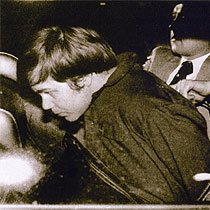
Today is the 25th anniversary of John Hinckley’s shooting of President Ronald Reagan. This case’s impact on the insanity defense has been phenomenal.

On April 19, the U.S. Supreme Court will hear an insanity defense case for the first time since the Hinckley case led to the change in so many state laws. The case centers around Eric Clark, a young man with schizophrenia. Clark killed a Flagstaff, Arizona, police officer during a traffic stop and was sentenced to 25 years in prison.

As with about 50 percent of those with schizophrenia, Clark lacked insight into his illness - he didn't know he was sick, and in fact thought that Flagstaff was being invaded by aliens.

Labels: , , , ,

Thursday, January 12, 2006

Insanity Defense: A True Story

[Lori] Farmer says she knows ... the voices weren't real. God would never urge her to hurt someone -- least of all her 4-year-old son, who loved Batman and used to run around in a cape that his grandma made from an old skirt. Zane was buried in his pretend cape 10 years ago. Farmer killed him.

When you read news reports of Andrea Yates’ new trial, keep Lori Farmer in mind. Farmer was found not guilty by reason of insanity and is now living in a group home, after years of treatment in a secure psychiatric facility. Her story is a rare look at the insanity defense from the perspective of the person charged with a crime.

And if the emotions of her story don’t get you, think about this.

People who are treated at places such as Western State Hospital are much less likely to commit another crime than those who land in prison, according to Bruce Gage, supervising psychiatrist for the hospital's Center for Forensic Services. He said most people released from prison will break the law within three years, while the recidivism rate for people found insane and treated at a specialized psychiatric program is less than 5 percent.

Labels: , , , ,